DESIGN
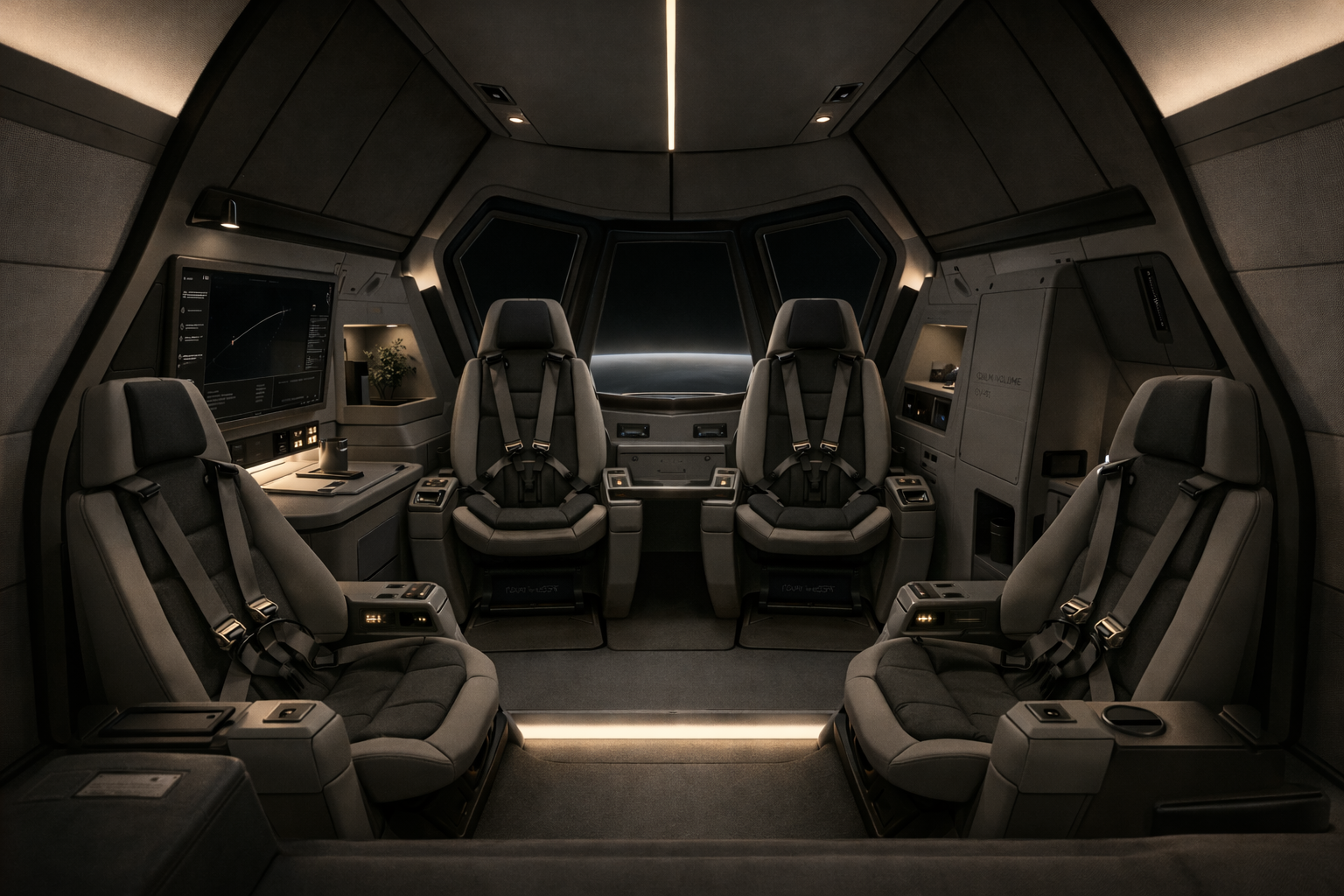
The Calm Volume
Capsule Interior 01
—
Habitat
One shell. Six states.
A vessel interior treated as nervous-system architecture.
Launch, high-load, orbit, private decompression, sleep, landing, recovery posture.
Most small spacecraft interiors still feel like engineering solved first, then humans inserted.
The Calm Volume begins the other way round.
It treats the capsule as nervous-system architecture: not a sci-fi lounge, not a machine room with seats, but a protective cognitive chamber for human beings moving through stress, stillness, work, awe, fatigue, sleep, and impact.
Its premise is simple: a capsule should not have one interior. It should have one volume, but multiple states of care. The same shell must answer to different body conditions, different psychological needs, and different moments of consequence.
Same shell. Different body condition. Different psychological need. Different cabin response.
Launch narrows attention. Ascent becomes tactile-first. Orbit opens the room. Private decompression creates one protected pocket of self. Sleep turns atmosphere into architecture. Landing restores consequence, trust, and bodily preparedness.
The result is not a prettier capsule. It is a new interior doctrine: a spacecraft that continuously reorganizes for clarity, comfort, and trust as the mission changes.
The Calm Volume treats clarity, tactile legibility, airflow, odor, light, privacy, and impact readiness as one continuous design responsibility.
It keeps the human being alive, but more than that, it continuously reorganizes comfort, dignity, and composure as the mission changes.
A good capsule interior should not merely contain a person. It should help them remain readable to themselves inside the mission.